Blue Route – The Marathon
HOME · Plaça de l'Om
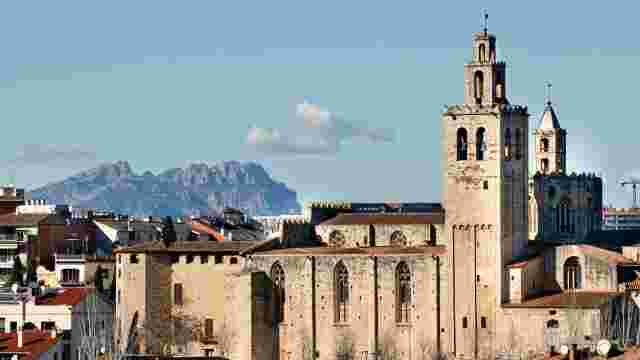
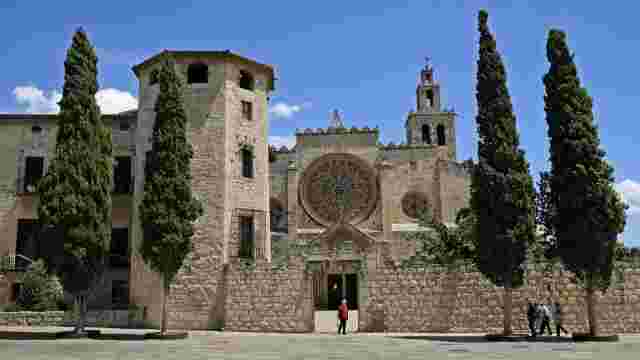
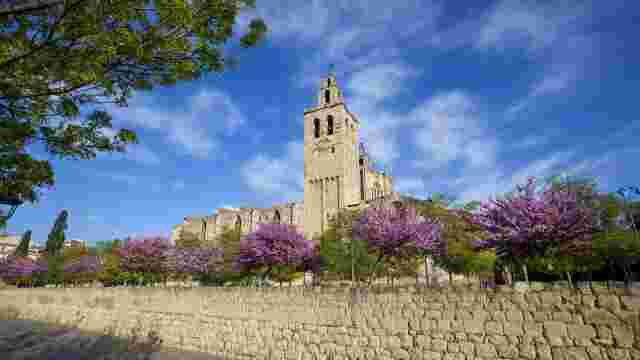
The tour begins at Plaça de l'Om, in front of the Cloister of the Monastery of Sant Cugat, where you will find the Monastery Museum, the first stop on the route.
MUSEUM OF THE MONASTERY – MONASTERY CLOISTER Located in the Monastery Cloister, the museum offers a journey through the history of the monastic complex and the daily life of the Benedictine monks. Its permanent exhibition includes models, interactive displays and audiovisuals to discover the evolution of the Monastery over the centuries. From Plaça de l'Om, head east, skirting the monastic complex, until you reach the Monastery Gardens.
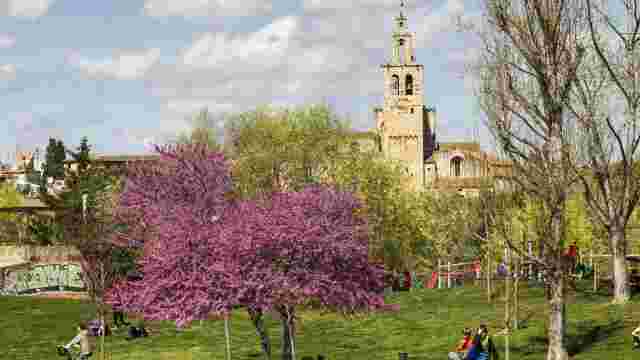
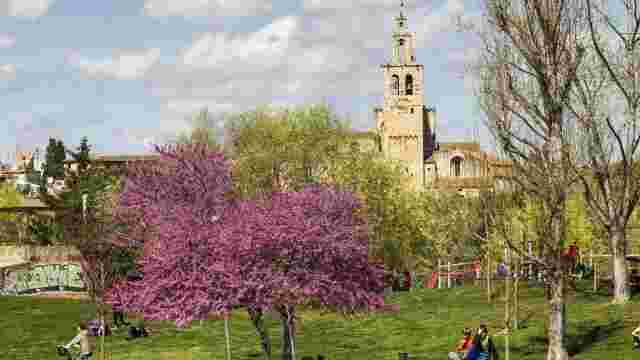
MONASTERY GARDENS This green space surrounds the Monastery and combines gardens, semi-open meadows and wooded areas with cypresses, holm oaks, plane trees and elms. Its paths allow you to stroll around the monumental complex and admire its architecture from different perspectives. Exit the gardens via the Francesc Macià promenade and follow it uphill, heading north, until you reach the roundabout. Take the first exit on the right onto Salvador Espriu Street and continue straight on to the junction with Clementina Arderiu Street, from where you can access Ferrussons Brook Park.
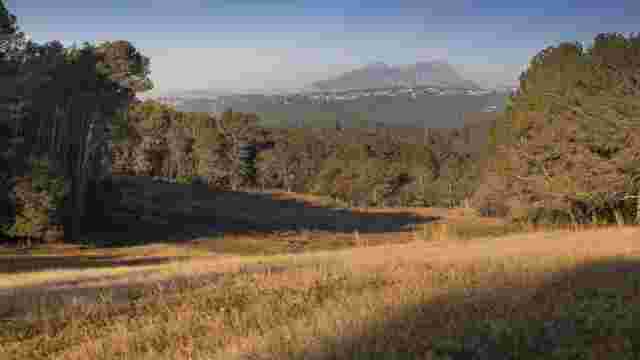
PARK OF THE TORRENT OF FERRUSSONS Situated at the highest point of Coll Favà, this park combines wooded areas, riverside paths and a naturalised torrent that promotes biodiversity. In the elevated section there is an old boundary cross and a viewpoint with views of Collserola, Montseny and Montserrat. Continue down Clementina Arderiu Street to the roundabout. From here, take Can Magí Avenue heading north. Continue uphill and turn right to access the green path behind the Joaquim Pla i Farreras Institute. Cross this green area until you join Abat Biure Street. Continue westwards to the roundabout at Plaça Abat Donadeu, next to the Sant Francesc sports pitches. Turn left onto Abat Escarré Street and continue straight on to Joan XXIII Street. Turn left and continue to Ragull Avenue, from where you will join Torre Blanca Promenade. Follow this promenade to Plaça d'en Coll. Cross it and continue along the same promenade until you reach Cerdanyola Avenue. Turn left and follow Cerdanyola Avenue to the end. Go around the roundabout and continue straight on to enter Pollancreda Park.
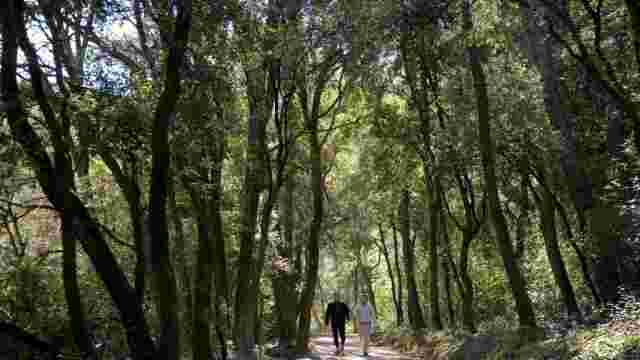
PARK OF THE POPLAR GROVE This extensive urban park, crossed by the Sant Cugat stream, is notable for its wooded areas and the two bridges that connect the different sections. It has walking paths, a cycle path, play areas and sports facilities, and is part of the green axis that connects the city with the natural surroundings of Collserola. Cross the park along the tree-lined inner path, heading towards Josep Puig i Cadafalch Street. Leave the park and join Avinguda de les Corts Catalanes, heading towards Plaça del Rotary Internacional. From the roundabout, take the Can Borrell path, which gives access to the Collserola Natural Park. Follow the forest track and, at the first fork, take the left-hand branch. Continue along the dirt track that crosses the wooded area. When you reach a crossroads in front of a field, turn right and then immediately left to continue towards the Pi d'en Xandri. PI
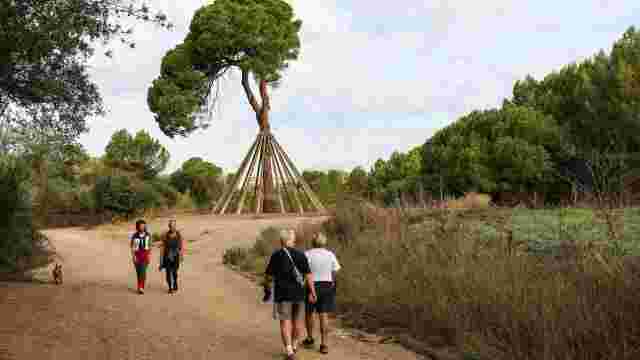
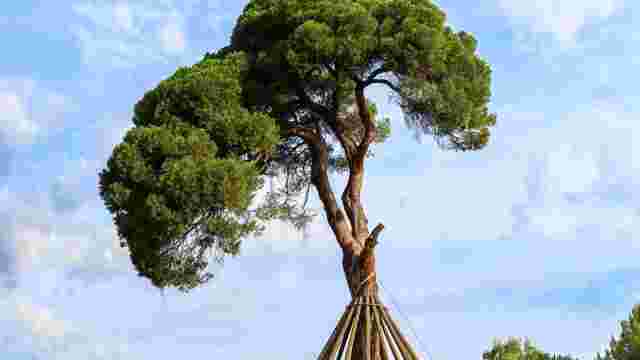
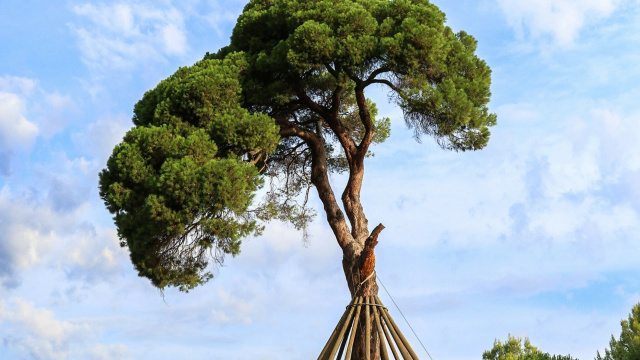
D'EN XANDRI This monumental pinyoner pine, over 250 years old and about 23 metres tall, is one of Sant Cugat's most emblematic trees. Situated in the grounds of Torre Negra, it is notable for its crown and the supports that hold it up, installed after the vandalism it suffered in 1997. Leave the Pi d'en Xandri behind and take the path that turns right, running parallel to the Riera de Sant Medir. At the first junction, turn left and continue along the path on the right towards Escola Avenç. Once you are level with the school, carry straight on until you reach the Sant Crist stream, where you will find a dirt track on the left. Continue along this path until you reach the built-up area of Carrer de Llaceres, identifiable by the houses and a bus stop. Turn right onto Carrer de Llaceres and continue downhill to the roundabout. From here, take Passeig d'Antoni Gaudí, which runs through the Arboretum park.
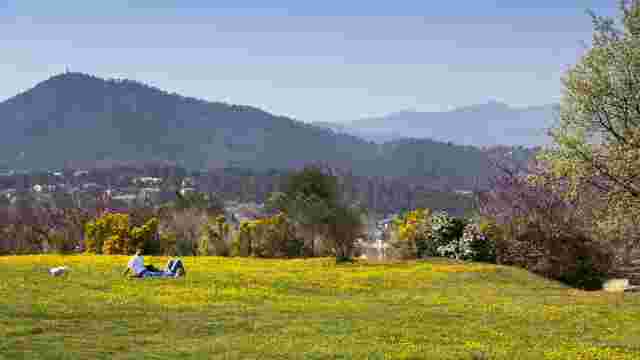
ARBORETUM PARK This green space combines open meadows and shady groves with a great diversity of species, such as holm oaks, pines and oaks. The Antoni Gaudí Promenade is notable for its row of American oaks, while the park offers expansive views towards Collserola and the Monastery. Continue along the Antoni Gaudí promenade downhill until you reach Bergara Street. Turn left and continue along Bergara Street to Gràcia Avenue. From here, turn right and go down the avenue to number 30, where you will find Casa Armet.
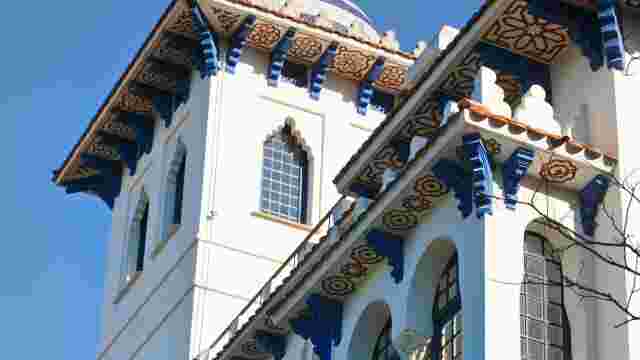
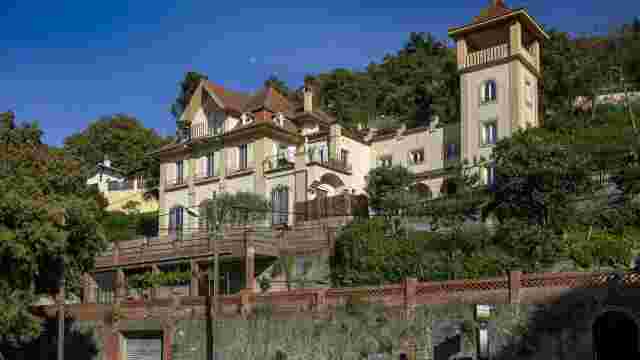
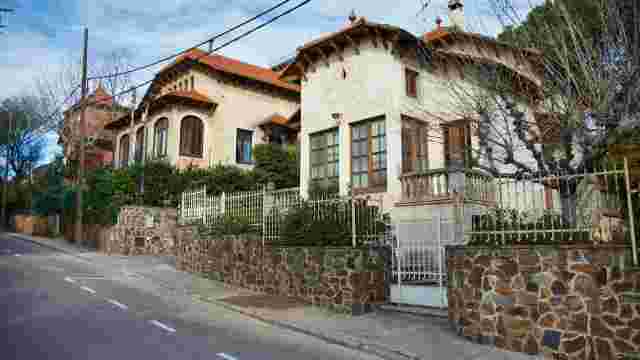
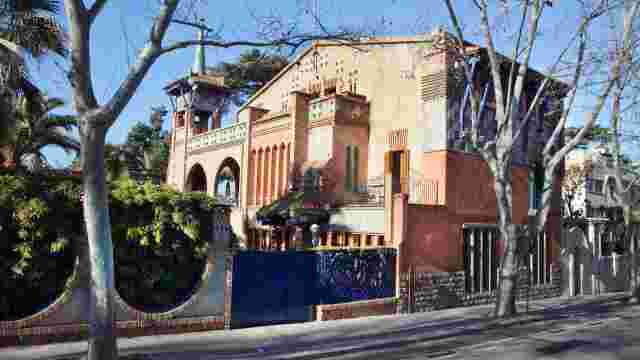
CASA ARMET Designed by Ferran Romeu i Ribot in the late 19th century, it is considered the first example of Modernisme in Sant Cugat. Conceived as a summer residence, it is notable for its asymmetrical composition and distinctive architectural elements. Turn around and return along Avinguda de Gràcia to Carrer de Bergara. Turn right onto Bergara Street and continue to Barcelona Street, where you should turn right again. Follow Barcelona Street downhill to Ribatallada Avenue. Cross it via the pedestrian underpass and take Viñolas Street. Continue straight on until you reach Can Quitèria Square, where you will find the Grau-Garriga Centre for Contemporary Textile Art.
GRAU-GARRIGA CENTRE FOR CONTEMPORARY TEXTILE ART Located in the former Cal Quitèria house, it is the first centre for contemporary textile art in the Spanish State. It houses works by the Sant Cugat-based artist Josep Grau-Garriga and municipal collections of contemporary tapestry, as well as temporary exhibitions dedicated to this artistic discipline. From Can Quitèria Square, take the Rambla de Can Móra heading north-east until you reach Dos de Maig Street. Turn right and continue along Dos de Maig Street until you reach the grounds of Ramon Barnils Park.
RAMON BARNILS PARK Situated in the centre of Sant Cugat, close to the Teatre-Auditori and the Town Hall, this park combines extensive green areas with play and leisure spaces. It has slides, a sandpit, play equipment and paved areas for sports activities. From the park, head towards the roundabout on Rambla del Celler and take Sant Medir Street northwards. Continue straight on until you find the Modernist Cellar on your left.
MODERNIST CELLAR Built in 1921 by the architect Cèsar Martinell, this building houses a permanent exhibition dedicated to the winemaking tradition of Sant Cugat, the history of the agricultural cooperative and the winemaking process. The museum also allows you to discover the cellar's architectural peculiarities, with its characteristic exposed brick parabolic arches. Continue uphill along Sant Medir Street until you reach Octavià Square. At the corner with Sant Medir Street you will find the Cal Gerrer House Museum, the next stop on the route.
CAL GERRER HOUSE MUSEUM – MARILYN MONROE This unique pre-modernist building, formerly home to the Arpí terracotta factory, houses the only museum in Europe dedicated to Marilyn Monroe. The exhibition tour reviews the actress's life and career and includes spaces dedicated to the Cabanas Alibau family of artists and to the Arpí ceramics tradition. Cross Plaça d'Octavià heading north and turn left onto Carrer Major. Continue uphill until you reach the medieval arcades, located in the first stretch of the street and around St Peter's Square.
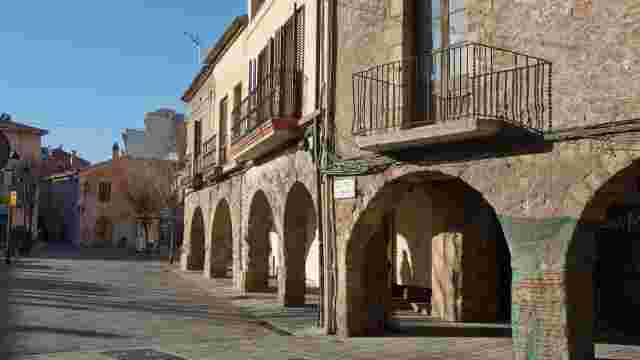
THE ARCADES OF MAJOR STREET This set of porches and arcades, of medieval origin, is one of the most representative testaments to historic Sant Cugat. In the past, the arcades protected the market's activity and hosted meetings of the Town Council, documented in this space in 1416. Continue along Major Street until you reach St Peter's Square, where you will find the Old Market.
OLD MARKET Built in 1912 to a design by Ferran Cels, it is a Modernista building that retains characteristic elements of the style, such as exposed brickwork, trapezoidal windows and the use of iron. It now houses a gastronomic and dining space. Cross St Peter's Square heading west and take St Dominic Street uphill until you reach St Magí Avenue. Turn left and continue until you join Mercè Rodoreda Street, which you will follow downhill to the junction with Manel Farrés Street. Turn right onto Manel Farrés Street and cross the railway underpass. Continue along the tree-lined path uphill until you reach the Vallvidrera road, where you will find one of the entrances to Can Mates Hill Park. Enter the park and follow the internal paths towards the hilltop, the highest point of this green space.
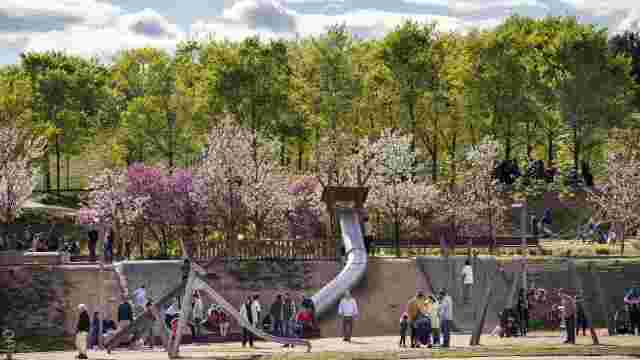
PARK OF THE HILL OF CAN MATES It is the largest urban park in Sant Cugat, known for its giant slides and spacious leisure areas. It combines meadows, wooded areas and former agricultural landscapes. From the summit, a viewpoint offers panoramic views of the city and its surroundings. From the summit, begin your descent down the north side of the park until you reach Ramon Llull Street. Follow this street eastwards to the Vallvidrera road. Turn left and continue northwards to the roundabout. Take the exit for Avinguda Rius i Taulet, where you will find the main entrance to Mercantic.
MERCANTIC Located in a former ceramics factory, Mercantic is a venue dedicated to antiques, art and creativity. Its spaces host antiques dealers, artisans, restaurateurs and artists, as well as a varied gastronomic offering and cultural activities. Leave the premises and head towards Can Graells Avenue. Continue until the junction with Víctor Català Street and turn right. Head down Víctor Català Street to the railway level crossing. Cross the railway tracks via the designated level crossing and continue along Alfons d'Aragó Street until you join Can Volpelleres Avenue. Follow the avenue downhill and take the tree-lined path on your right, from where you can access the Can Vernet Bridge.
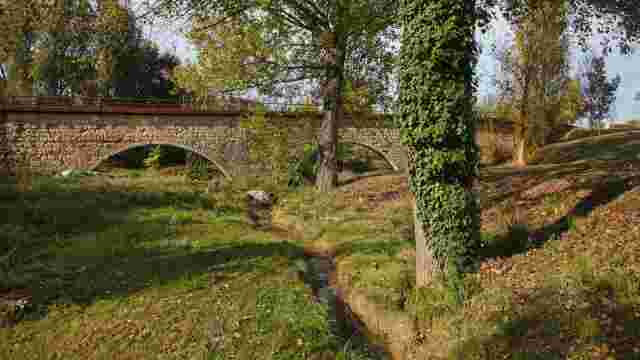
BRIDGE OF CAN VERNET This 14th-century Gothic aqueduct was part of the water supply system of Sant Cugat. It carried water from the Monks' Mine to the Monastery and the old town. It is now part of a green space crossed by the Volpelleres stream. Leave the bridge behind and enter Can Vernet Park, heading south-east towards the historic centre. Follow the park's inner paths until you reach Salvador Espriu Street. Turn right and continue along the edge of the Mina Health Centre until you reach the roundabout. From here, take Santa Anna Street and follow this pedestrianised stretch until you reach Pep Ventura Square, where you will find the Museum of Comic and Illustration.
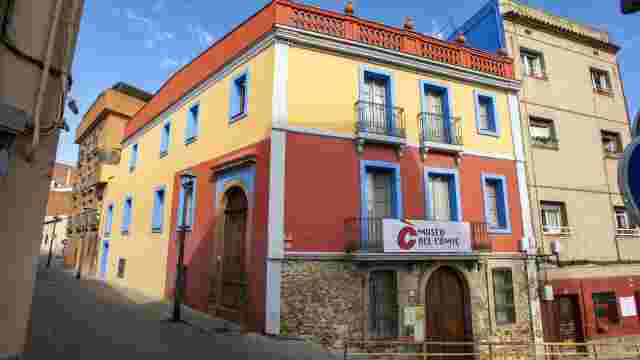
MUSEUM OF COMIC AND ILLUSTRATION Located in a mid-19th-century building, the museum offers a journey through the history of comic and illustration from 1865 to 2000. Its collection brings together hundreds of publications and original works that allow you to discover the evolution of graphic language and the main styles of comics. From Pep Ventura Square, take Sant Esteve Street eastwards until you reach Industria Street. Turn right and continue straight on to Plaça Augusta. Cross the square towards the Monastery and continue until you reach Plaça de l'Om, the final point of this circular route.
FINAL · Plaça de l'Om